Oh, look—it’s 2026, and football has officially become the world’s most expensive participation sport where the only thing getting tackled harder than the players is your wallet. If you thought the last decade was a masterclass in corporate greed disguised as entertainment, buckle up, because football news 2026 is here to remind you that the beautiful game is now just a beautifully packaged subscription service with extra steps. And by extra steps, we mean a 30% price hike, a 50% increase in ads, and a 100% chance you’ll question your life choices by halftime.
The 2026 World Cup: Now With 100% More Sponsored Existential Dread
Remember when the World Cup was about, you know, football? Those quaint days are long gone. The 2026 edition—because nothing says “global unity” like a tournament co-hosted by three countries that can’t even agree on a single time zone—has been rebranded as the “World Cup of Everything But Football.” Need proof? The official slogan is “Kick Off Your Dreams (Terms and Conditions Apply),” and the mascot is a sentient QR code named “ScanMe.”
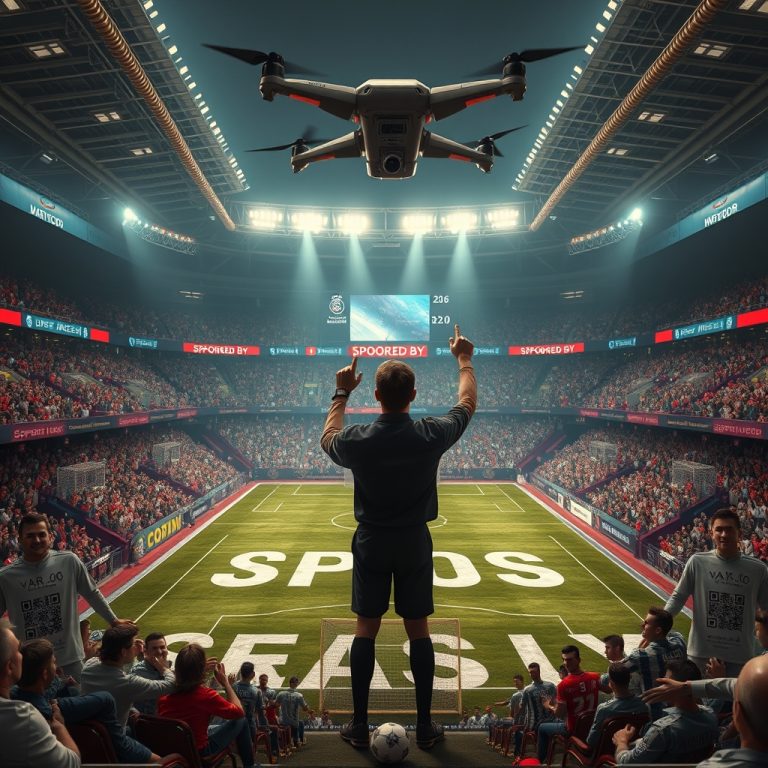
But the real kicker? The matches themselves. FIFA, in their infinite wisdom, has introduced “dynamic ad boards” that change based on your location, browsing history, and whether you’ve ever Googled “how to unsubscribe from Amazon Prime.” That’s right—your stadium experience is now tailored to your consumer profile. Missed the goal because you were too busy watching a 30-second spot for a cryptocurrency you can’t pronounce? Congratulations, you’re the target audience.
VAR 2.0: Because Nothing Says ‘Fair Play’ Like a Robot Overlord
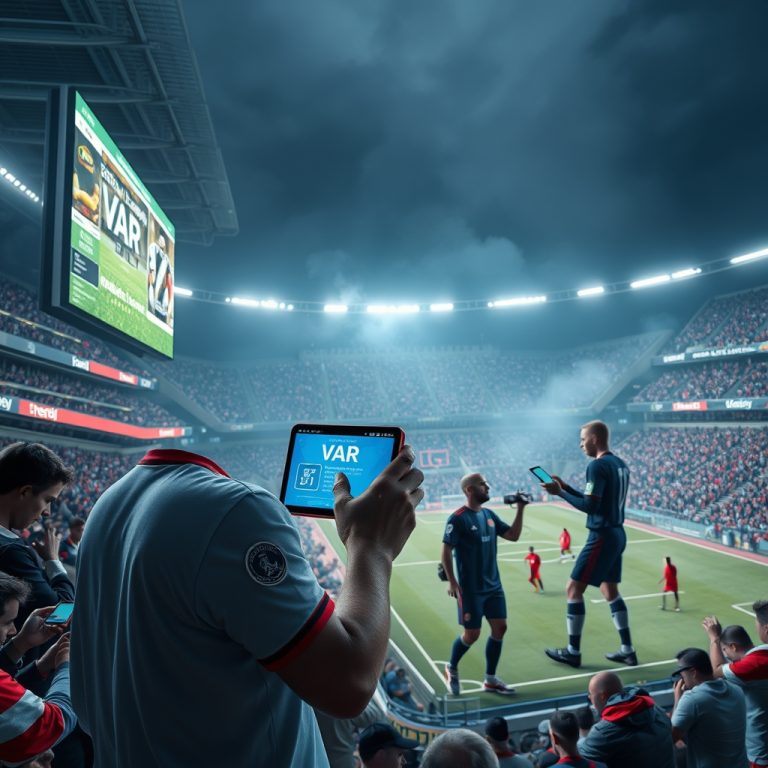
VAR was supposed to be the great equalizer, the technological savior of football’s soul. Instead, it’s become the most expensive way to make fans feel like they’re trapped in a Kafkaesque nightmare. In 2026, VAR has evolved into VAR 2.0: The Revenge of the Algorithms. Now, instead of just reviewing offside calls, it’s also judging your emotional response to the game. Cheer too loudly? That’s a “fan conduct violation.” Boo a bad call? Enjoy your three-match ban, delivered via push notification before the final whistle.
And let’s not forget the “AI Referee,” a faceless entity that communicates exclusively in corporate buzzwords. “The system has detected an irregularity in the flow of play,” it intones, as if reading from a PowerPoint presentation titled “How to Suck the Joy Out of Football in 10 Easy Steps.” The best part? You can’t even argue with it. The AI’s decisions are final, binding, and completely immune to logic, common sense, or the fact that it just disallowed a goal because the ball “exhibited non-regulation levels of spin.”
The Rise of the ‘Fan Token’: Because Nothing Says ‘Loyalty’ Like a Digital IOU
Gone are the days when supporting your team meant buying a scarf and singing your heart out. In 2026, loyalty is measured in “fan tokens,” a cryptocurrency-adjacent scam that promises you “exclusive access” to… well, nothing, really. Want to vote on the team’s next third kit? That’ll be 50 tokens. Want to unlock a “digital badge” that proves you’re a “true fan”? Another 20 tokens. Want to watch the match without ads? Just kidding—ads are mandatory, but here’s a 10% discount on your next token purchase!
The genius of fan tokens is that they’ve turned fandom into a pyramid scheme where the only people making money are the ones selling you the illusion of influence. It’s like a loyalty program designed by a Bond villain. “Congratulations, you’ve earned enough tokens to watch the team’s preseason friendly in VR!” reads the email. “Now, would you like to spend those tokens on a virtual high-five from the manager, or save them for the ‘exclusive’ opportunity to buy a season ticket at 2025 prices?”
The Stadium Experience: Now With More Surveillance Than a Dystopian YA Novel
Stadiums in 2026 are less “cathedrals of football” and more “high-security theme parks where the rides cost £150 and the only prize is crippling debt.” Facial recognition technology? Check. Mandatory biometric scanning at the turnstiles? Check. A “fan engagement app” that tracks your every move, from the snacks you buy to the number of times you stand up to cheer? Double-check.
The pièce de résistance? The “Smart Seat,” a futuristic throne of discomfort that adjusts its firmness based on your “emotional engagement levels.” Too excited? It’ll vibrate to “calm you down.” Not excited enough? Enjoy a gentle electric shock to “enhance the experience.” And if you dare to leave your seat during the match, the app will automatically deduct “loyalty points” from your account. Because nothing says “we care about fans” like treating them like lab rats in a behavioral experiment.
The Transfer Window: Where Common Sense Goes to Die (Again)
If you thought the transfer window was already a circus, wait until you see what 2026 has in store. Thanks to the introduction of “smart contracts,” players can now be bought, sold, and traded with the same ease as NFTs. Need a striker? Just swipe right on the “Transfer Tinder” app and hope he doesn’t ghost you after three months. And forget about loyalty—players are now “dynamic assets” whose value fluctuates based on their social media following and whether they’ve recently appeared in a viral TikTok challenge.
The best part? The transfer fees. In 2026, clubs no longer deal in millions or even billions. They deal in “value units,” a made-up currency that’s pegged to the price of Bitcoin, the CEO’s ego, and how many times the word “legacy” was used in the press release. A mid-table side just paid 500 value units for a 17-year-old winger who’s never played a senior match. Why? Because the algorithm said so, and the algorithm is never wrong (until it is, and then it’s your fault for not reading the terms and conditions).
So, What’s the Play Here?
Look, we could sit here all day lamenting the death of football as we knew it, but let’s be real—it’s not coming back. The genie’s out of the bottle, the horse has bolted, and the ship has not only sailed but also been turned into a floating casino where the house always wins. The question isn’t whether football in 2026 is a corporate hellscape; the question is whether we’re going to keep pretending it’s not.
Here’s the thing: they can’t do this without us. Every time we buy a ticket, download the app, or engage with the latest gimmick, we’re voting with our wallets. So, the next time you’re tempted to shell out for a “premium fan experience” or a “limited-edition digital collectible,” ask yourself: is this really why I fell in love with the game? Or am I just another sucker in a long line of suckers, holding the door open for the next round of exploitation?
The beautiful game isn’t dead—it’s just been repackaged, rebranded, and resold to the highest bidder. And if we’re not careful, we’ll wake up one day and realize we’re not fans anymore. We’re just another data point in a spreadsheet, a faceless statistic in a quarterly earnings report. So, go on—enjoy the match. Just don’t say we didn’t warn you when the only thing left to cheer for is the halftime show sponsored by a bank you’ve never heard of.
About the Author