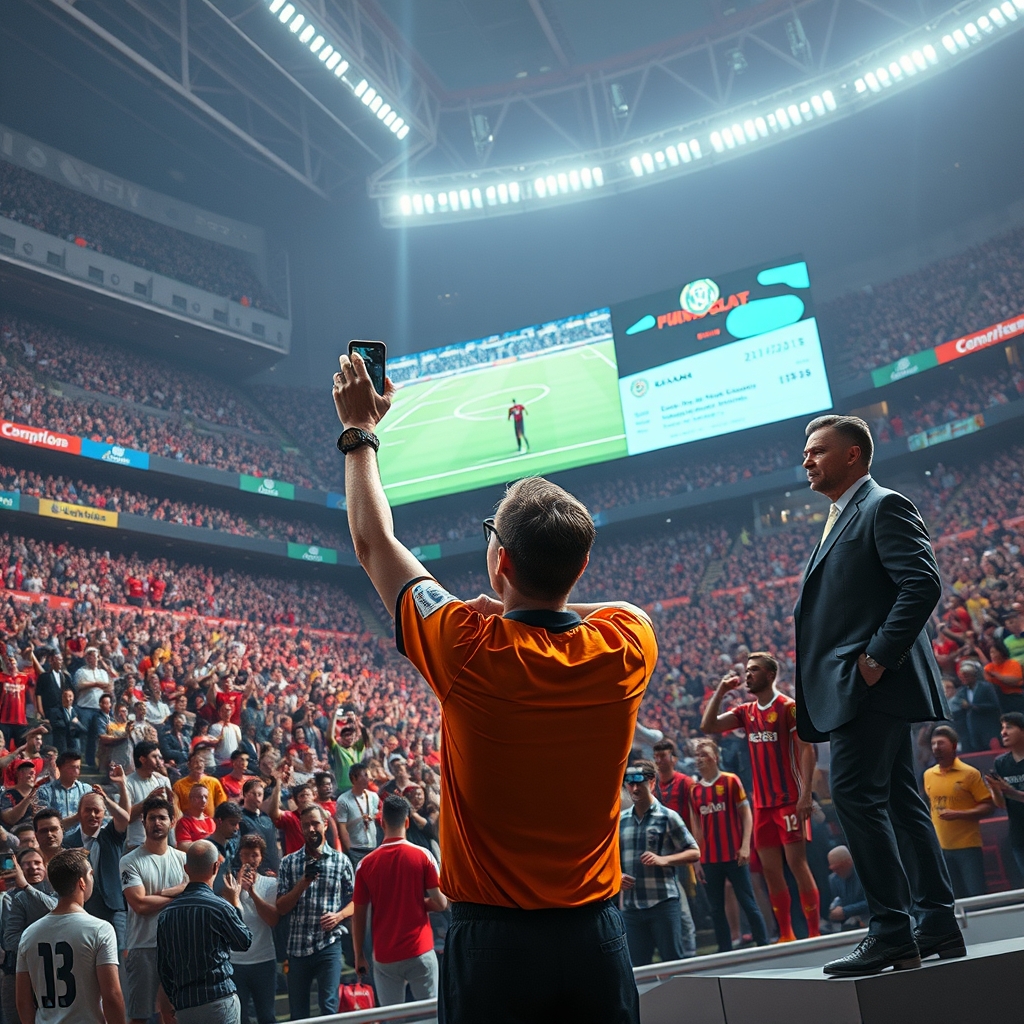
Oh, look—it’s 2026, and football is still the world’s most expensive, overhyped, and emotionally exhausting game of Monopoly. Except now, instead of little green houses, we’ve got VAR reviews that take longer than a Netflix binge, and instead of Boardwalk, we’ve got Saudi Pro League clubs waving stacks of cash thicker than a dictionary. If you thought football couldn’t get more absurd, congratulations: you’ve clearly never met the sport’s ability to outdo itself in the art of self-parody.
Football news 2026 isn’t just about who scored the most goals or which manager got sacked after three bad games (though, let’s be honest, that’s still the most reliable part of the sport). No, it’s about the slow-motion car crash of a once-beautiful game being repackaged, rebranded, and resold to us like it’s the latest iPhone—except this one comes with a side of existential dread. And yet, here we are, refreshing our feeds at 3 AM, waiting for the next transfer rumor or club ownership scandal like it’s the season finale of our favorite reality show. Spoiler: it is.
The Transfer Window: Where Logic Goes to Die (And We All Applaud)
Ah, the transfer window—the time of year when football clubs collectively lose their minds, and we all pretend this isn’t just a glorified game of Fantasy Football with real human beings. In 2026, the madness has reached new heights, because why settle for spending €100 million on a player when you can spend €200 million and still somehow end up with a squad that can’t string three passes together?
Gone are the days when a transfer was about strengthening a team. Now, it’s about flexing financial muscle, generating engagement metrics, and ensuring that the player’s Instagram following is large enough to justify the fee. Who needs a proper midfield when you can sign a winger with 50 million TikTok followers? The algorithm demands content, and by God, football is delivering—one overpriced, underperforming influencer at a time.
And let’s not forget the cherry on top: the inevitable “medical” that somehow never detects the player’s chronic inability to track back. It’s almost like clubs have a secret pact to keep physios employed by signing players who are one hamstring twinge away from early retirement. But hey, at least the highlight reels look good on YouTube.
VAR: The Gift That Keeps on Giving (Us Anxiety Attacks)
If you thought VAR was bad in 2023, wait until you see what 2026 has in store. The technology that was supposed to bring “clarity” to football has instead turned every match into a courtroom drama, complete with slow-motion replays, pixelated evidence, and referees who look like they’d rather be anywhere else than making a decision that will inevitably upset half the planet.
In 2026, VAR isn’t just a tool—it’s a full-blown psychological experiment. How long can you keep fans in suspense before telling them the goal they just celebrated was actually offside by the width of a toenail? The answer, apparently, is “as long as humanly possible.” And just when you think you’ve seen it all, along comes a new rule tweak that makes you question whether the people in charge have ever actually watched a game of football.
But the real kicker? We’re all still watching. We’re still arguing about it on Twitter. We’re still refreshing the page to see if the decision has been overturned, reversed, or somehow turned into a three-part documentary. VAR isn’t just a part of football now—it’s the main event, and we’re all just extras in its never-ending saga of frustration.
Ownership: Because Nothing Says ‘Football’ Like a Billionaire’s Vanity Project
If you’ve ever wondered what happens when you mix football with unchecked capitalism, 2026 has the answer: a sport that’s less about the game and more about who can out-spend, out-maneuver, and out-narcissist the competition. Club ownership in 2026 isn’t about passion, tradition, or even winning—it’s about branding, marketability, and ensuring that your team’s social media presence is stronger than its actual on-pitch performance.
Take, for example, the latest trend of “sportswashing,” where countries with questionable human rights records buy up football clubs like they’re limited-edition sneakers. Because nothing says “we care about the beautiful game” like using it to distract from your government’s less-than-beautiful actions. And let’s not forget the private equity firms, who’ve decided that football clubs are the new hot investment—because nothing says “stable financial asset” like a business model that relies on selling overpriced merchandise to emotionally volatile fans.
But the real tragedy? We keep buying the jerseys. We keep renewing our season tickets. We keep engaging with the content, no matter how absurd it gets. Football in 2026 isn’t just a sport—it’s a cautionary tale about what happens when you let money and ego run the show. And yet, here we are, still tuning in, still arguing, still pretending this isn’t just a very expensive, very public breakdown of common sense.
The Fans: The Only Ones Who Still Care (And That’s the Problem)
Let’s be real for a second: if football were a person, it would be the friend who keeps making terrible life choices but somehow still has a group of loyal enablers cheering them on. That’s us—the fans. We’re the ones who keep showing up, keep spending, keep caring, even when the sport does everything in its power to push us away.
In 2026, football fans are more engaged than ever, but not in the way the sport’s overlords intended. We’re not just watching matches—we’re dissecting them, memeing them, turning them into content for our own amusement. We’ve become the sport’s most unwilling comedians, because if we don’t laugh, we’ll cry. And let’s face it, no one wants to see a grown adult sobbing over a last-minute equalizer that was clearly offside.
But here’s the thing: as long as we keep caring, as long as we keep buying the tickets, the jerseys, the overpriced beer, football will keep testing our limits. It will keep pushing the boundaries of what we’re willing to accept, because why stop when the audience is still applauding? So, the next time you find yourself yelling at the screen over a dodgy VAR decision or a transfer that makes no sense, ask yourself: is this really the hill you want to die on? And then, because you’re a football fan, you’ll keep watching anyway—because deep down, you know you’re part of the problem. And honestly? That’s the most football thing about it.
So, welcome to football news 2026—the year the sport officially became a live-action satire of itself. The jokes are getting worse, the stakes are getting higher, and the fans? Well, we’re still here, aren’t we? And as long as we keep showing up, football will keep giving us reasons to stay. Whether that’s a good thing or not is anyone’s guess, but one thing’s for sure: it’s never boring. And in 2026, that might just be the most depressing compliment of all.
About the Author