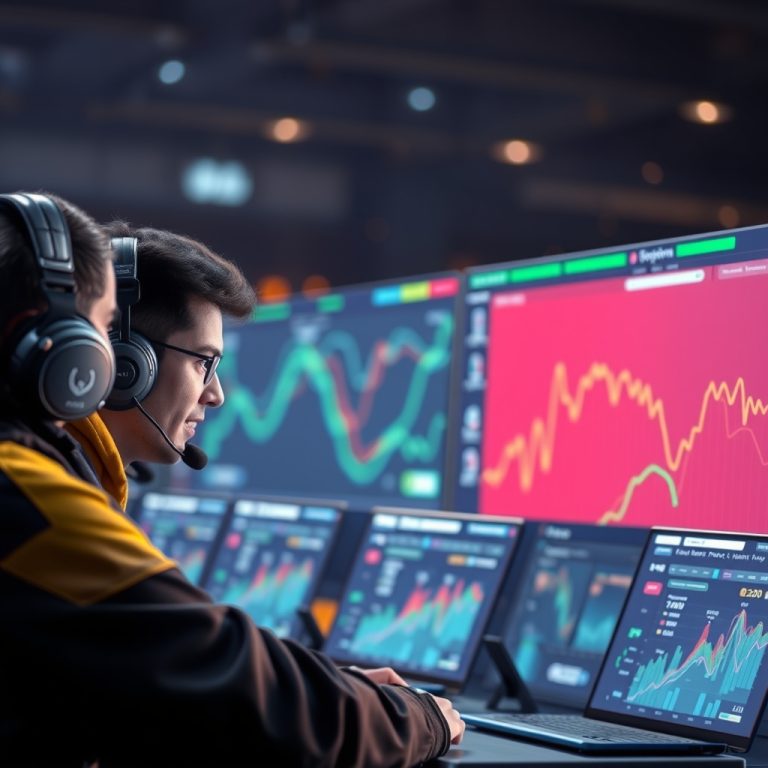
Esports has evolved from a niche subculture into a billion-dollar industry, and with that growth comes an insatiable demand for precision. Teams, analysts, and broadcasters no longer rely on gut instinct or post-match replays to dissect performances. Instead, they turn to tracking software—tools that capture, analyze, and visualize data in real time. But not all platforms are created equal. Some excel in raw data collection, others in strategic depth, and a select few in bridging the gap between analytics and actionable insights. The question is: which ones truly deliver?
The Core Demands of Modern Esports Tracking
Before diving into specific platforms, it’s essential to understand what separates the best from the rest. Modern esports tracking software must meet three non-negotiable criteria:
1. Real-Time Data Capture Without Latency
In a high-stakes tournament, a 500ms delay in data transmission can be the difference between a clutch play and a humiliating defeat. The best software doesn’t just record events—it does so with near-instantaneous precision. Platforms like Faceit Analytics and Shadow.gg have built their reputations on this foundation, ensuring that every kill, objective, and movement is logged the moment it happens. For teams that rely on live coaching adjustments, latency isn’t just an inconvenience; it’s a competitive liability.
2. Customizable Dashboards for Role-Specific Insights
A support player doesn’t need the same data as a carry or a coach. The best tracking tools recognize this and offer modular dashboards that can be tailored to individual roles. Tracker.gg and OP.GG lead in this regard, allowing users to filter metrics by hero, map, or even specific matchups. Meanwhile, Esports Charts takes it a step further by integrating macro-level trends, such as pick rates and win conditions, into its visualizations. The result? Teams can pivot from micro-adjustments to overarching strategies without switching tools.
3. Integration With Third-Party Tools and APIs
No tracking software exists in a vacuum. The most powerful platforms are those that play well with others—whether that means feeding data into Twitch overlays, syncing with Discord bots for live updates, or exporting datasets to Python scripts for deeper analysis. Mobalytics and U.GG stand out here, offering robust APIs that allow teams to build custom workflows. For organizations with in-house data scientists, this flexibility isn’t just useful; it’s a necessity.
The Contenders: A Breakdown of the Top Platforms
The esports tracking landscape is crowded, but a few names consistently rise to the top. Here’s how they stack up:
Faceit Analytics: The Gold Standard for FPS Titles
If first-person shooters are your domain, Faceit Analytics is the undisputed leader. Its integration with the Faceit platform means it doesn’t just track matches—it tracks the highest level of competitive play, from CS2 Majors to Valorant Champions Tour. The software’s heatmaps are particularly noteworthy, offering granular insights into player positioning, spray patterns, and utility usage. For teams looking to dissect opponent tendencies, Faceit’s replay analysis tools are unmatched. The only downside? Its focus on FPS titles means it’s less useful for MOBA or RTS enthusiasts.
Shadow.gg: The All-in-One Solution for MOBAs and Battle Royales
Where Faceit excels in precision, Shadow.gg thrives in versatility. Built to handle everything from League of Legends to PUBG, it’s the go-to choice for organizations that compete across multiple genres. Its standout feature is the “Shadow Vision” mode, which overlays real-time data onto live broadcasts, giving casters and analysts a dynamic way to engage audiences. The platform also offers one of the most intuitive UIs in the space, making it accessible to teams without dedicated data analysts. However, its broad focus means it occasionally lacks the depth of genre-specific tools.
Esports Charts: The Macro-Level Powerhouse
While most tracking software zeroes in on individual matches, Esports Charts takes a bird’s-eye view. It’s the platform of choice for analysts who need to track meta shifts, viewership trends, and tournament economics. Its “Esports Barometer” tool, for example, aggregates data from thousands of matches to predict which strategies are rising or falling in popularity. This makes it indispensable for teams looking to scout opponents or for sponsors evaluating ROI. The trade-off? It’s not designed for real-time in-game adjustments, making it a complementary tool rather than a standalone solution.
Tracker.gg and OP.GG: The Fan-Friendly Alternatives
Not every team has the budget for enterprise-level software. For smaller organizations and solo players, Tracker.gg and OP.GG offer lightweight, affordable alternatives. Both platforms provide core tracking features—match histories, performance stats, and basic visualizations—without the steep learning curve of their more advanced counterparts. OP.GG, in particular, shines in its community-driven approach, allowing users to compare stats against global averages. The limitation? Neither platform offers the depth or customization required for professional play, but for amateur teams and streamers, they’re more than sufficient.
The Hidden Costs of Tracking Software
It’s easy to assume that the best software is simply the one with the most features. But in esports, where margins are razor-thin, the true cost of a platform isn’t just its subscription fee—it’s the time and resources required to extract value from it. A tool like Mobalytics, for example, offers unparalleled depth in its GPI (Gamer Performance Index) metrics, but it demands a significant time investment to interpret its data effectively. Conversely, a platform like U.GG might lack some advanced features, but its simplicity means teams can start using it immediately.
The other hidden cost? Data overload. In an industry where every variable can be measured—from APM (actions per minute) to ward placements—it’s tempting to track everything. But as any seasoned analyst will tell you, not all data is created equal. The best teams aren’t the ones with the most metrics; they’re the ones that know which metrics matter. This is where the human element comes into play. No software, no matter how advanced, can replace the intuition of a coach who knows when to ignore the numbers and trust their gut.
The esports tracking software market is a battlefield in its own right, with platforms constantly vying to outdo each other in features, speed, and integration. But the real winners aren’t the ones with the flashiest dashboards or the most data points—they’re the ones that empower teams to turn information into action. Whether it’s Faceit’s precision, Shadow.gg’s versatility, or Esports Charts’ macro-level insights, the best tool is ultimately the one that aligns with a team’s specific needs. In an industry where the difference between victory and defeat often comes down to milliseconds, the right software isn’t just an advantage; it’s the foundation of dominance. And as the stakes continue to rise, the teams that master these tools won’t just compete—they’ll redefine what’s possible.
About the Author