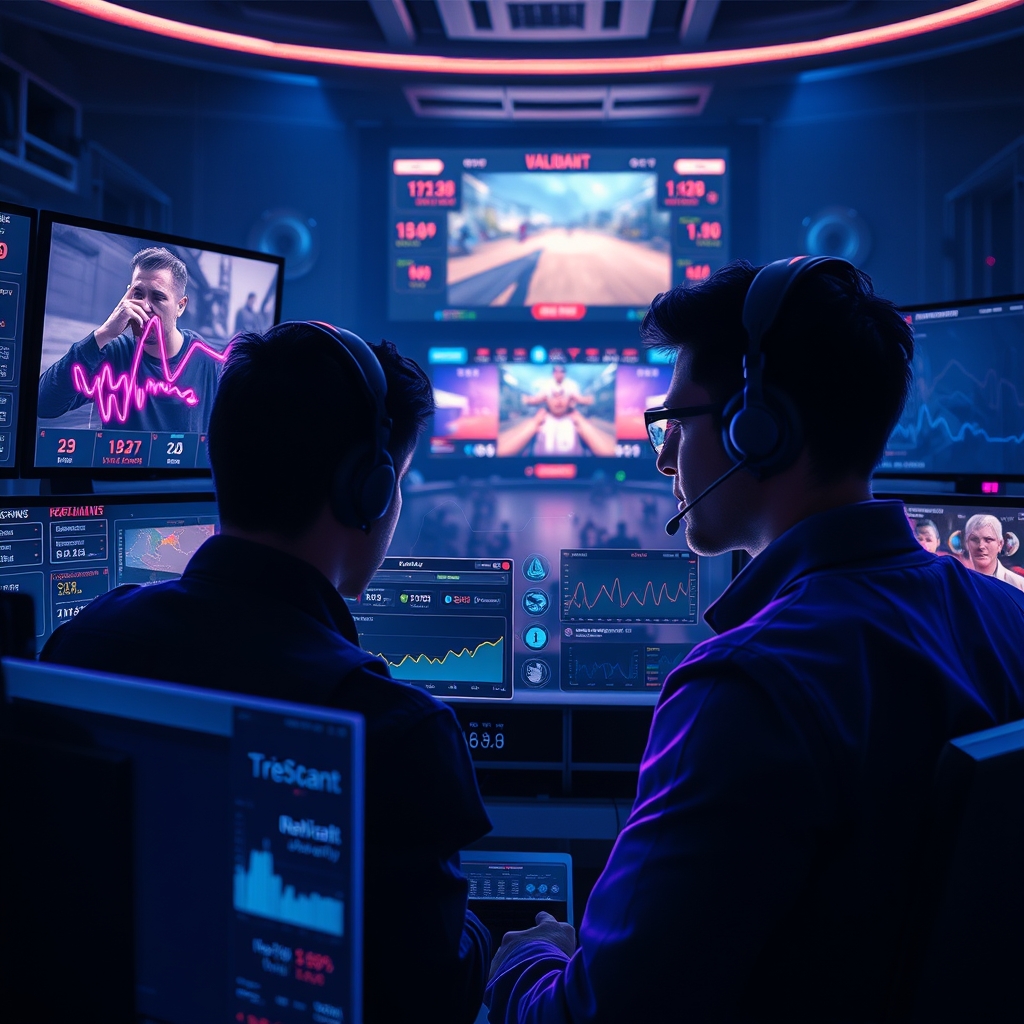
Esports has transcended its niche origins to become a global spectacle, but its backbone remains unseen: the tracking software that governs fairness, strategy, and audience immersion. While flashy plays and viral moments dominate headlines, the real revolution lies in the silent algorithms and real-time data pipelines that separate casual gaming from professional competition. The best esports leagues and tournaments now rely on tracking software not just as a utility, but as a cornerstone of their legitimacy—and their future.
The Unseen Arbiters of Fair Play
At the highest levels of competition, a single frame can decide a match. Tracking software like Faceit Anti-Cheat, ESEA, or BattleEye operate as the invisible referees, analyzing player behavior with surgical precision. These tools don’t just flag obvious exploits; they dissect mouse movements, reaction times, and even hardware anomalies to detect subtle forms of cheating that human observers would miss. In a 2023 report by the Esports Integrity Commission (ESIC), over 60% of detected infractions in major tournaments were uncovered through automated tracking, not human oversight.
The stakes are higher than ever. With prize pools exceeding $40 million in events like The International (Dota 2) or the League of Legends World Championship, the margin for error is nonexistent. Yet, the reliance on tracking software introduces a paradox: the more sophisticated the tools become, the more creative cheaters get. The cat-and-mouse game between developers and exploiters has turned anti-cheat software into a high-stakes arms race, where a single undetected hack can tarnish an entire league’s reputation.
Beyond the Scoreboard: The Data That Shapes Meta
Tracking software isn’t just about policing players—it’s about shaping the game itself. Platforms like OP.GG, Dotabuff, and Tracker.gg aggregate millions of matches to reveal patterns that define the competitive meta. In Counter-Strike 2, for example, tracking tools have exposed how minor map adjustments can shift win rates by as much as 15% for certain teams. Coaches and analysts now treat these datasets as gospel, using them to craft strategies that exploit statistical weaknesses in opponents.
But the influence of tracking software extends beyond professional play. Casual players and streamers use these tools to benchmark their performance, creating a feedback loop where amateur data informs pro strategies, and vice versa. The result is a hyper-evolved ecosystem where every patch, every balance change, is dissected in real time. The best leagues—ESL Pro League, Valorant Champions Tour, Overwatch League—leverage this data to refine their formats, ensuring that tournaments remain unpredictable yet fair.
The Fan Experience: From Spectator to Participant
Esports tracking software has redefined what it means to be a fan. Gone are the days of passive viewing; today’s audiences demand immersion. Tools like Mobalytics for League of Legends or CS:GO Demos Manager allow viewers to dissect matches frame-by-frame, comparing their own gameplay to pros. Broadcasters, in turn, use real-time stats to enhance storytelling—highlighting a player’s 95% headshot accuracy in a clutch moment or a team’s 70% win rate on a specific map side.
The most innovative leagues are pushing this further. The Valorant Champions Tour (VCT) integrates tracking software directly into its broadcast, overlaying live win probability graphs and player heatmaps. This isn’t just flashy graphics; it’s a fundamental shift in how fans engage with the game. A 2022 Nielsen study found that viewers who interacted with in-game stats were 40% more likely to watch an entire match, and 25% more likely to follow the league long-term.
The Dark Side of Data Dominance
For all its benefits, the reliance on tracking software introduces new vulnerabilities. The 2021 CS:GO skin-betting scandal, where third-party tracking sites were used to manipulate odds, exposed how easily data can be weaponized. Even legitimate tools can distort perceptions—players may fixate on metrics like K/D ratios or CS per minute, ignoring the intangibles that define greatness. The pressure to conform to data-driven meta can also stifle creativity, turning esports into a game of numbers rather than skill.
Leagues must strike a delicate balance: embracing the transparency and engagement that tracking software provides while mitigating its risks. The best tournaments, like The International or Riot’s Worlds, use data as a tool for storytelling, not just analytics. They highlight the human element—the underdog’s unexpected strategy, the veteran’s clutch play—while letting the numbers provide context, not dictate the narrative.
The Future: AI, Predictive Analytics, and the Next Frontier
The next generation of tracking software won’t just record what happens—it will predict what’s coming. AI-driven tools like SenpAI for League of Legends or Shadow.gg for Valorant are already experimenting with predictive modeling, forecasting match outcomes based on draft picks, player histories, and even in-game momentum shifts. These tools could revolutionize coaching, allowing teams to simulate strategies before they’re executed, or even automate certain aspects of playcalling.
But the most transformative impact may be on the fan experience. Imagine a live broadcast where AI-generated commentary adapts to your preferences, highlighting the stats and storylines you care about most. Or a fantasy esports platform that uses real-time tracking to adjust player values mid-match. The line between player, coach, and fan is blurring, and tracking software is the catalyst.
The best esports leagues understand that tracking software is more than a backend tool—it’s the foundation of trust, engagement, and innovation. As the industry grows, the software that governs it will determine whether esports remains a fleeting spectacle or cements itself as a permanent pillar of global entertainment. The data is already here; the question is whether we’ll use it to elevate the game—or let it define its limits.
About the Author